


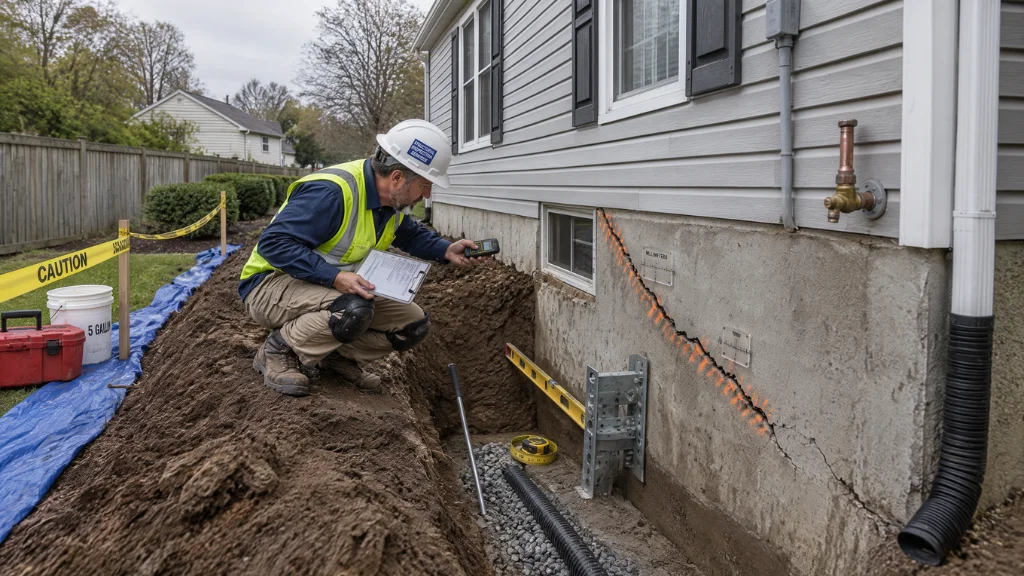
A foundation repair inspection helps determine whether visible cracks, uneven floors, or other warning signs indicate structural movement. The inspection can also identify moisture, drainage, or soil conditions contributing to damage. For U.S. homeowners, it is often the first step before choosing any repair method.
A proper inspection should explain what is happening, how serious the problem appears, and what should happen next. The goal is not simply to find cracks around the house. It is to separate cosmetic defects from conditions that may require engineering or foundation repairs.
A foundation inspection evaluates visible structural conditions, movement patterns, drainage, moisture, and related warning signs. The inspector may examine walls, floors, doors, crawl spaces, basements, and the exterior perimeter. When structural concerns are significant, an independent structural engineer can provide measurements, analysis, and repair recommendations.
Foundation Inspection at a Glance
| Question | What U.S. Homeowners Should Know |
|---|---|
| What does it check? | Cracks, settlement, floors, walls, moisture, drainage, framing, and visible foundation components |
| How long does it take? | Many inspections take roughly one to two hours, depending on the property |
| What can it cost? | Paid inspections commonly fall around $300–$1,000, while complex engineering evaluations may cost more |
| Who can inspect? | Home inspectors, foundation specialists, and structural engineers perform different levels of evaluation |
| Do all cracks mean failure? | No. Location, direction, width, movement, and surrounding conditions matter |
| What happens afterward? | You may receive monitoring advice, drainage recommendations, further testing, or a repair plan |
Current U.S. cost guides show considerable price variation based on the inspector, property size, accessibility, and scope. This Old House reports a typical range near $300 to $1,000, while other current guides show similar starting ranges. More involved engineering assessments can cost considerably more.
Signs That May Justify a Foundation Repair Inspection
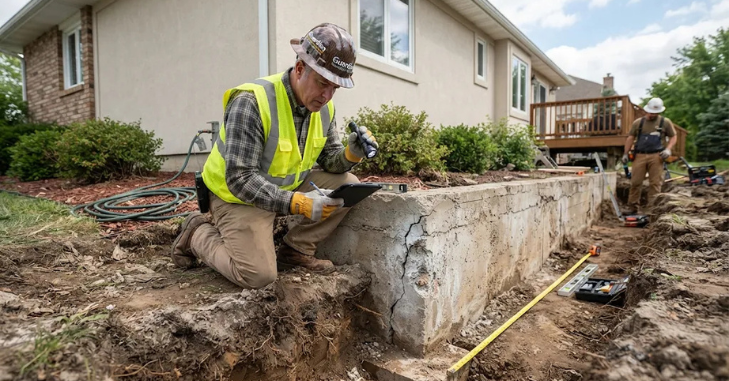
Foundation problems often produce clues beyond visible concrete cracks. Changes throughout the house can show that part of the structure has shifted. Watching for patterns is more useful than focusing on one isolated defect.
Common warning signs are listed below.
- Stair-step cracks through brick or masonry.
- Horizontal cracks in basement or foundation walls.
- Floors that slope or feel uneven.
- Doors or windows that suddenly stick.
- Gaps around doors, windows, walls, or trim.
- Bowed or leaning basement walls.
- Cracks that widen over time.
- Moisture or standing water near the foundation.
- A chimney that appears separated or tilted.
- Cracked or displaced slabs.
Not every warning sign proves serious structural failure. Houses can develop minor cracks from shrinkage, normal settlement, or material movement. For a measurable benchmark, HUD’s NSPIRE foundation standard treats a crack as a deficiency when it is at least 1/4 inch wide and at least 12 inches long. An inspection becomes more useful when several symptoms appear together or continue changing.
Moisture deserves special attention because soil conditions can change as water levels rise and fall. FEMA guidance notes that high soil moisture can contribute to differential settlement and foundation cracking. Homeowners should therefore look at drainage conditions alongside visible structural symptoms.
What Happens During a Foundation Inspection?
The Foundation Repair Inspection process usually begins with a discussion about the home’s history and the problems you have noticed. An inspector may ask when cracks appeared, whether they changed, and whether previous repairs exist. This background helps connect visible symptoms with possible movement patterns.
The exterior inspection typically covers foundation walls, grading, drainage, cracks, and areas where water may collect. The inspector may also look for separation around brickwork, siding, windows, or other building components. Accessible crawl spaces and basement walls can reveal conditions that are hidden from outside.
Inside the home, the inspector may examine wall cracks, floor slopes, doors, windows, ceilings, and trim. More detailed evaluations may include measurements of floor elevations or structural movement. These measurements can help identify whether one part of the house sits higher or lower than another.
Access affects how complete the assessment can be. Finished basements, tight crawl spaces, storage, and landscaping can obstruct important areas. Clearing accessible spaces before the appointment can help the inspector work more efficiently.
Homeowners planning other maintenance can also review Readella’s broader home improvement resources. Looking at the whole property can reveal related issues instead of treating each symptom separately. That approach matters when water, roofing, plumbing, and drainage conditions overlap.
Home Inspector, Foundation Contractor, or Structural Engineer?
These professionals do not perform exactly the same job. A general home inspector can identify visible structural concerns and recommend further evaluation. ASHI standards require inspection of accessible structural components but do not require engineering analysis.
A foundation repair company can inspect the property and explain repairs its team provides. Some companies offer inspections at no charge because they hope to perform the work afterward. That can be useful for estimates, but homeowners may still want an independent opinion before approving expensive structural work.
A licensed structural engineer is especially useful when the cause or severity remains uncertain. Engineers can analyze structural performance rather than only identify visible defects. They can also provide written findings that homeowners may use when comparing repair proposals.
For major movement, expensive proposed repairs, or conflicting contractor opinions, independence can be valuable. Paying for an engineering assessment may help you avoid choosing a repair before the underlying problem is understood. Requirements and professional licensing rules vary by state, so check local regulations.
How Much Does a Foundation Inspection Cost in the U.S.?
Current 2026 consumer cost guides generally place many residential inspections between about $300 and $1,000. Angi reports that costs can extend far higher for larger or more complex properties. HomeGuide reports an average range of about $300 to $750 for many inspections.
Several factors can move the price upward or downward. Larger houses take longer to assess, while limited access can complicate the work. Pier-and-beam systems, finished basements, and detailed engineering measurements may also increase the fee.
Your location matters because labor rates and professional fees differ across U.S. markets. Emergency appointments may also cost more than scheduled evaluations. Ask what the quoted fee includes before hiring anyone.
The written report is another important consideration. Some inspections provide only verbal observations, while engineering services may include detailed measurements and recommendations. Compare the deliverables instead of comparing price alone.
Foundation Inspection Cost Versus Repair Cost
An inspection and a repair estimate serve different purposes. The inspection identifies conditions and helps determine what may be causing them. A repair proposal explains what a contractor recommends doing about those conditions.
Repair costs vary dramatically because foundation problems have many causes and solutions. Minor crack work can cost far less than underpinning, stabilization, or major lifting. Current cost guides show that extensive structural work can reach many thousands of dollars.
That difference makes diagnosis important before signing a large contract. The most expensive solution is not automatically the correct one. A strong inspection should connect the proposed work to documented evidence.
Why Drainage and Moisture Matter
Water near a foundation can contribute to problems even when the concrete itself looks sound. Poor grading, clogged drainage systems, plumbing leaks, and concentrated roof runoff can change soil moisture around the house. Repeated wetting and drying can affect some soils more than others.
FEMA guidance specifically identifies moisture and drainage as important foundation concerns. It recommends directing roof runoff away from buildings and preventing persistent moisture around crawl spaces. These measures can reduce conditions that contribute to settlement or deterioration.
If yard drainage contributes to the problem, Readella’s guide to an irrigation system audit explains ways to identify leaks and poor water distribution. Plumbing problems can create similar moisture concerns near or beneath a structure. Readella also covers factors to consider when choosing plumbing services for household repairs.
Roof runoff deserves attention as well because gutters and downspouts control large amounts of water. Homeowners reviewing exterior maintenance can also read about roof appraisal costs. Coordinating these systems can help reduce repeated water exposure around the structure.
What Should a Foundation Inspection Report Include?
A useful report should clearly document observed conditions. It may include crack locations, photographs, measurements, drainage observations, and areas that could not be accessed. More detailed evaluations may also discuss probable causes and recommended next steps.
The report should distinguish findings from assumptions. If more testing is required, the document should say so rather than presenting an uncertain cause as proven. Clear wording makes it easier to compare later repair proposals.
Keep the report even if immediate repairs are unnecessary. Photos and measurements can create a baseline for future comparisons. Changes over six or twelve months may provide valuable evidence about whether movement is active.
Questions to Ask Before Hiring an Inspector
Choosing the right professional can make the inspection more useful. Ask about qualifications, experience with your foundation type, and whether the inspector sells repairs. You should also understand exactly what you will receive afterward.
Useful questions include:
- Are you licensed or certified where required?
- Do you provide a written report?
- Will you measure floor elevations?
- Do you inspect crawl spaces or basements?
- How do you separate cosmetic cracks from structural concerns?
- Do you design or sell repair services?
- What areas will not be included?
- When should a structural engineer become involved?
- Will the report include repair priorities?
- Can the findings be used to compare contractor estimates?
These questions help define the inspection before the appointment begins. They can also reveal whether you need a basic visual assessment or a deeper engineering evaluation. Clear expectations reduce confusion once repair estimates arrive.
What to Do After the Inspection
Start by reading the report before requesting several repair estimates. Identify the documented problem, likely cause, and recommended scope. Contractors should be able to explain how their proposals address those findings.
If recommendations differ significantly, consider getting another independent opinion. This is especially useful when one proposal recommends minor monitoring and another recommends major structural work. Large differences deserve explanation before money changes hands.
Some repairs can also affect floors, walls, or finishes after structural movement is corrected. Readella’s article about floor transitions can help homeowners understand flooring connections during later renovation work. Structural stabilization should normally come before cosmetic restoration.
Protect the House Before Choosing the Repair
Foundation problems can feel urgent, especially when cracks or uneven floors appear suddenly. The safest next move is to determine what changed and why before selecting a repair system. A qualified inspection gives you evidence for that decision.
Start with a professional who matches the complexity of the problem. Request written findings, understand the cause, and compare repair proposals against those findings. That process can help you spend money on the work your home needs rather than the work someone simply wants to sell.
Foundation Repair Inspection FAQ
How long does a foundation inspection take?
Many residential inspections take about one to two hours on site. Larger properties or difficult access can extend that time. Written engineering reports may require additional work after the visit.
Does a foundation repair inspection always mean I need repairs?
No, an inspection does not automatically mean structural work is necessary. Some cracks may require monitoring, moisture control, or minor maintenance instead. The purpose is to understand the condition before choosing a response.
Are horizontal foundation cracks serious?
Horizontal cracks can deserve prompt professional attention because lateral soil pressure may contribute to them. Their severity depends on width, displacement, wall movement, and surrounding conditions. An inspector or engineer should evaluate concerning cracks rather than judging them by appearance alone.
Should I hire a structural engineer before a foundation repair company?
An engineer can be valuable when movement appears significant or the proposed repair is expensive. Independence can also help when several contractors recommend different solutions. A contractor inspection may still be useful for obtaining repair options and pricing.
Can I inspect my own foundation?
You can monitor visible cracks, moisture, doors, floors, and exterior drainage. A homeowner inspection cannot replace professional analysis when structural movement is suspected. Documenting changes with dated photos can still provide useful information for a later evaluation.
Is a foundation inspection worth paying for?
A paid independent assessment can be worthwhile before committing to substantial structural work. It gives you information that is separate from the company selling the repair. That can make contractor comparisons and repair decisions easier.
