


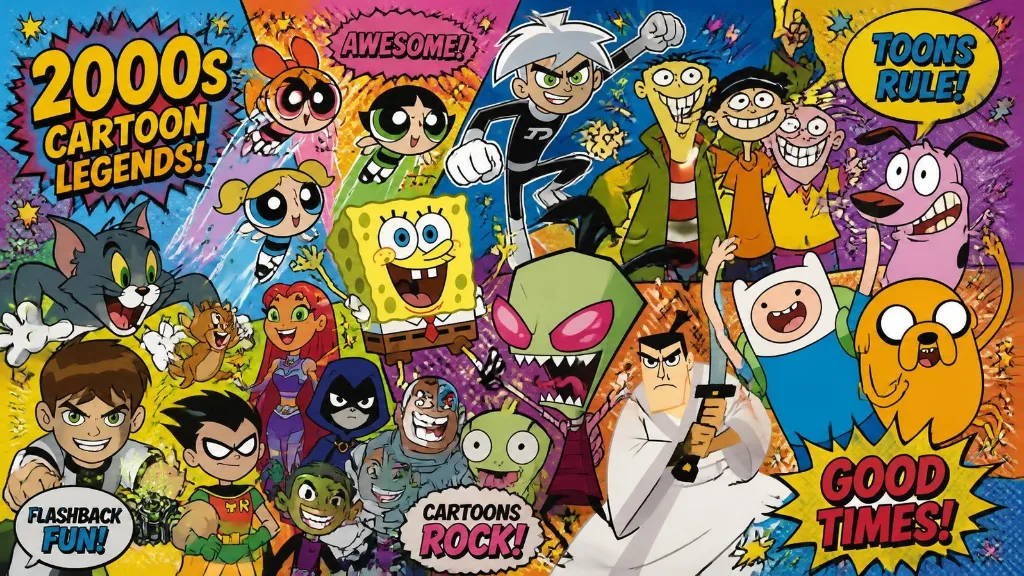
The 2000s cartoons era gave American viewers an unusually broad mix of comedy, action, fantasy, and experimental animation. Nickelodeon, Cartoon Network, Disney Channel, and Kids’ WB each developed recognizable styles. Many series from that period remain easy to remember decades later.
Some favorites technically began before January 2000 but became major parts of childhood television during the following decade. This guide makes that distinction clear instead of pretending every defining show debuted after 1999. It also includes forgotten choices beyond the titles found on every nostalgia list.
| Quick fact | Details |
|---|---|
| Main era covered | 2000–2009 |
| Audience focus | US viewers |
| Main networks | Cartoon Network, Nickelodeon, Disney Channel, Kids’ WB |
| Number of featured shows | 20 |
| Inclusion rule | Debuted during the decade or strongly defined US viewing during it |
| Main genres | Comedy, action, fantasy, superheroes, adventure |
Direct answer: The most memorable animated shows of the 2000s include Avatar: The Last Airbender, Teen Titans, Kim Possible, and Samurai Jack. Comedy favorites include The Fairly OddParents, Foster’s Home for Imaginary Friends, and The Grim Adventures of Billy & Mandy. Late-1990s hits like SpongeBob SquarePants also shaped the decade.
What Counts as a Cartoon From the 2000s?
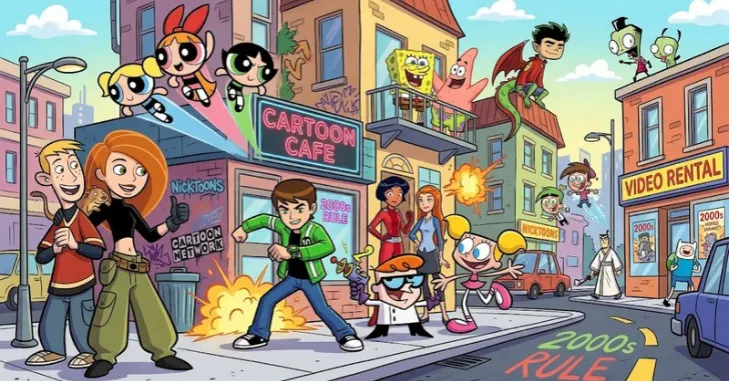
A 2000s Cartoons strict list would only include series that premiered between January 2000 and December 2009. That definition works for historical records, but nostalgia rarely follows clean calendar boundaries. Children watching television in 2002 did not care whether a favorite show premiered in 1999.
That matters for programs such as SpongeBob SquarePants, Ed, Edd n Eddy, and The Powerpuff Girls. They began during the late 1990s yet remained major parts of American children’s television afterward. Excluding them would create an accurate debut list but an incomplete picture of the era.
This guide therefore uses two standards. Most selections debuted during the decade, while a few earlier programs earned inclusion through their continued influence. The approach better reflects what American viewers were actually watching after school and on weekends.
20 2000s Cartoons That Still Deserve a Rewatch
| Show | Network most associated with it | Premiere | Why viewers remember it |
|---|---|---|---|
| Avatar: The Last Airbender | Nickelodeon | 2005 | Strong characters, serialized fantasy, and emotional storytelling |
| Teen Titans | Cartoon Network | 2003 | Superhero action mixed with comedy and character drama |
| Samurai Jack | Cartoon Network | 2001 | Minimal dialogue, cinematic action, and distinctive visual design |
| The Fairly OddParents | Nickelodeon | 2001 | Fast jokes and wish-driven stories with endless comic possibilities |
| Kim Possible | Disney Channel | 2002 | Teen comedy paired with globe-spanning spy adventures |
| The Proud Family | Disney Channel | 2001 | Family stories, school problems, humor, and memorable personalities |
| Codename: Kids Next Door | Cartoon Network | 2002 | Childhood frustrations transformed into secret-agent missions |
| The Adventures of Jimmy Neutron | Nickelodeon | 2002 | Science-fiction inventions and early television CGI |
| The Grim Adventures of Billy & Mandy | Cartoon Network | 2003 | Dark comedy built around an unlikely supernatural friendship |
| Danny Phantom | Nickelodeon | 2004 | Teenage problems combined with ghosts and superhero action |
| Foster’s Home for Imaginary Friends | Cartoon Network | 2004 | Creative designs, friendship stories, and strange comedy |
| Ben 10 | Cartoon Network | 2005 | Transformations, aliens, action, and a simple adventure hook |
| American Dragon: Jake Long | Disney Channel | 2005 | Urban fantasy built around school life and magical responsibilities |
| My Life as a Teenage Robot | Nickelodeon | 2003 | Retro design with superhero action and teenage comedy |
| Invader Zim | Nickelodeon | 2001 | Dark humor, bizarre visuals, and a lasting cult following |
| Chowder | Cartoon Network | 2007 | Surreal comedy and an instantly recognizable visual style |
| Phineas and Ferb | Disney Channel | 2007 | Inventive summer adventures, songs, and running jokes |
| SpongeBob SquarePants | Nickelodeon | 1999 | Became a defining comedy presence throughout the decade |
| Ed, Edd n Eddy | Cartoon Network | 1999 | Neighborhood schemes and a distinctive hand-drawn style |
| The Powerpuff Girls | Cartoon Network | 1998 | Superhero comedy that remained influential in the early decade |
No ranking can perfectly represent every childhood television schedule. Cable packages, age, location, and personal taste changed what each household watched. The table instead highlights programs that capture several major styles from the period.
The range matters as much as the individual titles. A viewer could move from fantasy storytelling to gross-out comedy, superhero action, or surreal experiments within one afternoon. That variety helps explain the decade’s lasting appeal.
Why Cartoon Network, Nickelodeon, and Disney Felt So Different
Cartoon Network often gave animation creators room for unusual designs and strong visual identities. Samurai Jack could become quiet and cinematic, while Billy & Mandy embraced macabre comedy. Shows such as Foster’s Home and Chowder later pushed visual experimentation in different directions.
Nickelodeon built much of its identity around memorable characters and energetic comedy. The Fairly OddParents turned wishes into rapid-fire chaos, while Danny Phantom brought supernatural action into suburban teenage life. Avatar showed that the same channel could also support a carefully connected long-form story.
Disney Channel leaned heavily toward school, family, and double-life comedy. Kim Possible balanced homework with international missions, while American Dragon added magical duties to ordinary adolescence. Phineas and Ferb later turned summer vacation into an endless source of elaborate inventions.
These competing identities gave young viewers meaningful preferences. Choosing a favorite channel often meant choosing a style of humor, storytelling, and visual design. That competition also helped the decade avoid feeling creatively uniform.
How Action Shows Became More Ambitious
Several series treated younger audiences as viewers who could follow continuing character development. Avatar used an ongoing journey rather than resetting every major conflict after one episode. Relationships and earlier choices affected later stories.
Teen Titans also moved between standalone adventures and longer emotional arcs. Its characters faced conflicts involving friendship, trust, identity, and responsibility. Those themes helped the series reach viewers who wanted more than isolated superhero battles.
Samurai Jack took another path by trusting images and sound. Some sequences used long stretches with little dialogue. That confidence made the program look different from louder comedy-driven schedules around it.
The result was a wider definition of children’s television. Animation could still deliver jokes and simple adventures without being limited to them. Complex stories increasingly shared schedules with traditional episodic comedy.
Comedy Was Equally Important
The decade’s comedy programs often depended on clearly defined personalities. Timmy Turner created his own problems through magical wishes, while Billy barely understood the danger surrounding him. Those simple character engines could generate dozens of different plots.
Foster’s Home for Imaginary Friends used an entire building full of unusual personalities. Ed, Edd n Eddy kept returning to elaborate plans designed to earn money from neighborhood children. Familiar formulas made the characters easy to revisit without making every episode identical.
Comedy also became stranger and more visually adventurous, a streak that later reached its peak in the kind of unhinged characters covered in Readella’s Lemongrab breakdown. Invader Zim mixed science fiction with uncomfortable humor and exaggerated design. Chowder later treated the animation itself as part of the joke.
Forgotten Favorites Worth Remembering
Big franchises dominate modern nostalgia discussions, but smaller series helped make the decade interesting. Time Squad turned historical mistakes into comedy, while Whatever Happened to Robot Jones? used a deliberately retro appearance. Neither became a franchise on the scale of the biggest network hits.
Disney had overlooked selections as well. Dave the Barbarian used fantasy clichés for absurd comedy, while Fillmore! treated school safety patrols like serious police dramas. Their unusual premises make both easy to distinguish from standard school comedies.
Nickelodeon viewers may remember ChalkZone, Catscratch, or El Tigre. These programs never reached the cultural scale of the network’s largest properties. They still represent the riskier side of television animation during that period.
For readers interested in how memorable animated characters continued developing in the following decade, Readella’s Lemongrab character guide offers a useful next stop. Adventure Time arrived in 2010 and inherited several creative ideas associated with the previous era. That makes the character a natural bridge between two generations of television animation.
Which Show Should You Rewatch First?
Choose Avatar: The Last Airbender when you want a complete story with meaningful character growth. Start Samurai Jack when visual storytelling and atmosphere matter more to you. Pick Teen Titans if you prefer superhero action mixed with an approachable team dynamic.
For comedy, The Fairly OddParents delivers fast pacing and familiar childhood frustrations. Billy & Mandy suits viewers who prefer darker jokes, while Foster’s Home offers warmer character comedy. Phineas and Ferb works especially well for viewers who enjoy songs and repeated comic patterns.
A nostalgic rewatch does not need to become a full-series commitment. Pick three remembered episodes and see whether the humor or storytelling still works for you. That approach can separate genuine favorites from shows you mainly remember through theme songs.
Why These Shows Still Matter
Many 2000s cartoons arrived before streaming made entire seasons instantly available. Viewers often discovered programs through scheduled blocks, reruns, and channel surfing. That viewing pattern gave individual episodes and opening themes unusual staying power.
The decade also sat between two production eras. Traditional television animation remained prominent while CGI became increasingly visible. Imported visual influences and longer story arcs also became more noticeable across American schedules.
Later animated hits built on many of those developments. Readella’s guide to Lemongrab shows how Adventure Time combined absurd comedy with surprisingly serious character themes. Readers interested in superhero storytelling can also explore the site’s She-Venom explainer and broader Entertainment coverage.
Start With the Show You Still Quote
The best nostalgic rewatch usually begins with a character, joke, or theme song you already remember. From there, revisit a familiar episode before committing to an entire season. Memory can make certain series feel different from how they play today.
The larger story of the decade is its creative range. American viewers received superhero dramas, surreal comedies, fantasy epics, school stories, and visual experiments on competing channels. That variety is why these animated shows still spark arguments about which network had the strongest era.
For more television, character, and pop-culture features, continue through Readella’s Entertainment coverage. Readers moving into 2010s animation can start with the site’s detailed Lemongrab feature. Superhero fans can also continue with Readella’s She-Venom character guide.
Frequently Asked Questions About 2000s Cartoons
What were the most popular animated shows of the 2000s?
Major favorites included SpongeBob SquarePants, The Fairly OddParents, Avatar: The Last Airbender, Teen Titans, and Kim Possible. Cartoon Network also had major successes with Ben 10 and Codename: Kids Next Door. Popularity varied by year, network access, and viewer age.
Did SpongeBob start in the 2000s?
No, SpongeBob SquarePants premiered in 1999. Its strongest cultural association with the following decade makes it difficult to ignore in nostalgia discussions. Much of its growth into a huge American television property happened during those years.
What were the biggest Cartoon Network shows from that era?
Important titles included Samurai Jack, Teen Titans, Codename: Kids Next Door, Foster’s Home for Imaginary Friends, and Ben 10. Earlier hits like The Powerpuff Girls and Ed, Edd n Eddy remained important too. The channel’s lineup ranged from broad comedy to ambitious action.
Which Nickelodeon shows best represent the decade?
The Fairly OddParents, Jimmy Neutron, Danny Phantom, Invader Zim, and Avatar show the network’s range. SpongeBob remained an enormous presence despite beginning in 1999. Together, these programs covered comedy, science fiction, superheroes, and fantasy.
What Disney animated shows should nostalgic viewers remember?
Start with Kim Possible, The Proud Family, American Dragon: Jake Long, and Phineas and Ferb. You can also revisit lesser-discussed programs like Dave the Barbarian and The Emperor’s New School. Disney’s strongest animation often mixed extraordinary situations with school or family problems.
