


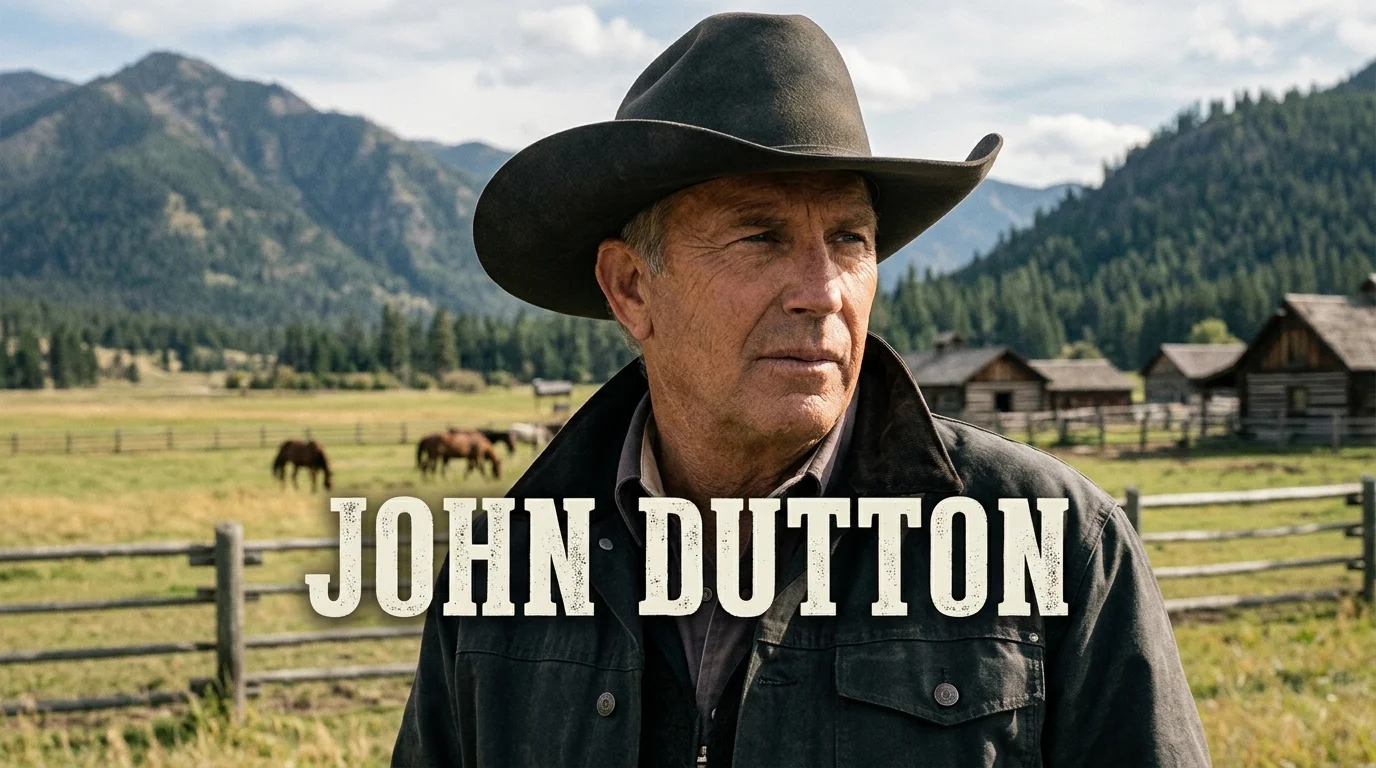
John Dutton is Yellowstone’s central patriarch, played by Kevin Costner through the first half of Season 5. He owns the Yellowstone Dutton Ranch and spends much of the series fighting to preserve it. His choices drive the show’s conflicts involving family, land, politics, loyalty, and violence.
As the story develops, the character becomes much more than a wealthy Montana rancher. He becomes governor, loses people closest to him, and repeatedly tests his children’s loyalty. His eventual death also changes what the ranch means, even as he defends it.
| Key fact | Details |
|---|---|
| Character | John Dutton III |
| Series | Yellowstone |
| Actor | Kevin Costner |
| Occupation | Rancher and later Governor of Montana |
| Wife | Evelyn Dutton |
| Children | Lee, Beth, Kayce, and adopted son Jamie |
| Ranch | Yellowstone Dutton Ranch |
| Final fate | Murdered during Season 5 |
| Ranch’s final fate | Sold to the Broken Rock Reservation |
| Original series ending | December 2024 |
Direct answer: John Dutton is the powerful ranching patriarch at the center of Yellowstone. Kevin Costner portrays him as a father determined to protect his Montana land at almost any cost. His story ends with his murder, while his children ultimately protect the land through a solution he never expected.
Key takeaways
- Kevin Costner played the Dutton family patriarch from the series premiere through Season 5A.
- The character owns the Yellowstone ranch and later becomes Montana’s governor.
- Evelyn is his late wife, while Lee, Beth, and Kayce are his biological children.
- Jamie was adopted into the family and develops the most destructive relationship with his father.
- Season 5B confirms that the rancher was murdered rather than dying by suicide.
- Kayce ultimately sells the Yellowstone property to the Broken Rock Reservation.
- The character’s legacy continues through later stories involving his surviving family.
Who Is the Dutton Patriarch in Yellowstone?
The modern Dutton patriarch is the head of a family whose identity is inseparable from its Montana property. He sees ownership as an obligation inherited from earlier generations, not simply a source of money. That belief explains many decisions that might otherwise seem extreme.
His outlook also creates the central contradiction behind Yellowstone. He wants to preserve a way of life, yet his methods often involve intimidation and violence. The series repeatedly asks whether protecting a legacy can justify the damage caused in its name.
Official Yellowstone material describes Costner’s character as the patriarch of a complicated ranching family. Paramount also presents his connection to the American West as central to the character from the start. That combination helped establish the series as a modern Western rather than a conventional family drama.
Readers interested in other character-focused entertainment guides can browse Readella’s Entertainment coverage. The section covers television, film, celebrities, and popular culture. It’s a natural home for more stories connected to major screen characters.
Why John Dutton Became the Center of Yellowstone

Land is the simplest way to understand his motivations throughout the series. The ranch represents family history, personal identity, responsibility, and a promise carried through several generations. Selling it for a profitable development would therefore represent failure in his eyes.
That conviction puts him at odds with developers, political interests, neighboring communities, and sometimes his own children. His enemies change, but the underlying argument stays the same. Someone wants a future for the land that conflicts with his idea of stewardship.
The character also works because the series rarely presents him as morally uncomplicated. He can protect family members while remaining controlling and ruthless. Viewers are asked to understand his motives without necessarily approving every choice.
That complexity separates him from a straightforward Western hero. His cowboy image suggests tradition, but his battles frequently involve lawyers, corporations, elections, and government power. The old West and modern America keep colliding around him.
The Dutton Family: Wife, Children, and Grandchildren
Evelyn Dutton was his wife before the main series events. She died after a horseback riding accident while their children were young. Her death left lasting emotional damage, particularly within Beth’s relationship with herself and her father.
Lee is the eldest son and initially appears positioned to continue the ranching legacy. His early death removes the most obvious successor. That loss increases the pressure on the surviving family members.
Beth becomes her father’s fiercest defender and one of his most effective allies. Her financial skills and aggressive personality make her valuable during battles over the property. Her relationship with ranch foreman Rip Wheeler also ties another loyal figure directly into the family.
Kayce has a more conflicted relationship with the ranch and his father. His marriage to Monica and responsibility for their son Tate pull him toward a different life. That tension becomes especially important when he later decides what should happen to the property.
Jamie is the adopted son and the family’s most complicated internal rival. He becomes a lawyer and political figure, but his need for approval repeatedly collides with resentment. That relationship eventually contributes to the destructive events surrounding the family’s final chapters.
From Rancher to Governor of Montana
The series eventually moves its patriarch from ranch politics into state politics. In Season 5, he becomes governor of Montana and gains greater authority over development decisions. Yet political office never replaces the ranch as his main concern.
His governorship shows how far he will go to protect his property. Public responsibility and private interest become increasingly difficult to separate. That conflict adds another layer to the show’s questions about power.
The political storyline also changes his relationship with Jamie. Both men occupy powerful positions, but they develop opposing ambitions. Their conflict becomes more dangerous because government authority now sits beside long-running family resentment.
What Happened to Him in Yellowstone Season 5?
Major spoilers begin here. Season 5B opens with the discovery of the governor’s body inside the governor’s mansion. The circumstances initially suggest suicide, but the series soon reveals that he was murdered.
The killing is connected to a murder-for-hire operation arranged through Sarah Atwood. Sarah is closely involved with Jamie and had previously discussed removing the threat his father posed. The revelation pushes Beth and Kayce toward uncovering what happened.
Costner does not return to perform the character’s final scenes. His departure was confirmed before the second half of Season 5 aired. Costner said scheduling problems involving Yellowstone and his Horizon films contributed to his decision.
Executive producer Christina Voros later said the patriarch’s death had long been part of the ending. The precise circumstances changed after Costner left the production. The broader destination for both the character and the property therefore remained connected to the planned conclusion.
Why Did Kevin Costner Leave Yellowstone?
Costner publicly confirmed in June 2024 that he would not return for the remaining episodes. He had been developing and filming his ambitious Western project, Horizon: An American Saga. Production schedules for the two projects became a major source of difficulty.
The actor also disputed simplified accounts suggesting that he had abandoned the television series for his movies. He told CBS that he had tried to make room for both productions. He still expressed affection for the show and the work he had done there.
His exit required Yellowstone to finish its main storyline without its central performer. Rather than attempt a recast, the series made the patriarch’s absence part of the final conflict. That choice shifted greater responsibility toward Beth, Kayce, Jamie, and Rip.
For another look at how performers become closely connected with famous screen identities, Readella’s She-Venom character guide explores Anne Weying’s comic and movie versions. Readella also covers character histories beyond live-action drama. Its Lemongrab explainer follows another memorable television character through a very different story.
What Happened to the Yellowstone Ranch?
The ranch survives, but not as Dutton property. Kayce reaches an agreement to sell the land to Thomas Rainwater and the Broken Rock Reservation. The price is $1.25 per acre, reflecting the symbolic historical value used within the finale’s story.
The agreement requires the land to remain protected from development. Kayce keeps the East Camp area for his immediate family. This lets him keep a connection to ranching without carrying his father’s entire burden.
That resolution creates an important distinction between preserving ownership and preserving land. The patriarch spent years treating those goals as nearly identical. His children ultimately save the place by giving up family control over most of it.
The ending also connects the modern series with 1883. The franchise had established that the land’s history stretched across several generations of Duttons. Returning it to Native stewardship completes the circle the wider franchise has been building.
Why the Character Still Matters After Yellowstone
Costner’s performance gave the series a recognizable center from its 2018 debut. The character mixed the familiar image of a Western patriarch with modern political and corporate conflicts. That combination helped the show speak to audiences beyond traditional Western fans.
His greatest narrative impact may come from what happens after his death. Beth seeks revenge, Kayce rethinks the ranch, and the family finally breaks from parts of his worldview. His absence forces surviving characters to decide which pieces of his legacy deserve preservation.
The franchise has continued beyond the original series. In 2026, Marshals follows Kayce as he moves into another phase of his life. Recent episodes and interviews still reference the emotional impact left by his father’s death.
For more television and celebrity features, readers can continue through Readella’s Entertainment archive. The site also publishes profiles of recognizable screen personalities. These stories make for a good next read after finishing the Dutton family saga.
Frequently Asked Questions
Is John Dutton a real person?
No, the Yellowstone ranch patriarch is a fictional television character. Taylor Sheridan and John Linson created Yellowstone, while Kevin Costner portrayed its leading rancher. The Montana politics and ranch disputes are parts of the show’s fictional story.
Who plays the Yellowstone patriarch?
Kevin Costner plays the modern family patriarch throughout the first four seasons and Season 5A. Josh Lucas portrays a younger version in flashback scenes. Costner did not return for the final batch of episodes.
How many children does he have?
He raises four children: Lee, Beth, Kayce, and Jamie. Lee, Beth, and Kayce are his biological children with Evelyn. Jamie was adopted and later learns the truth about his birth family.
Does the Yellowstone patriarch die?
Yes, Season 5B confirms his death early in the first episode. Investigators initially treat the scene as an apparent suicide. The story later reveals that he was murdered through a hired operation.
Who gets the ranch at the end of Yellowstone?
The Broken Rock Reservation obtains most of the Yellowstone property through Kayce’s agreement with Thomas Rainwater. Kayce and his family retain the East Camp property. The arrangement protects the wider land from future development.
Could Kevin Costner return in a Yellowstone spinoff?
A return would require a flashback or another device because the character is dead in the established story. In October 2026, Luke Grimes said a flashback appearance could be interesting but indicated no such return was planned. Grimes now continues Kayce’s story in Marshals.
The Legacy Yellowstone Leaves Behind
The Dutton patriarch begins the series believing that protecting his inheritance means never surrendering the ranch. By the finale, his children discover another way to preserve what mattered beneath that promise. The land survives even though family ownership largely ends.
That reversal gives the character’s story a fitting final tension. His determination keeps the ranch intact long enough for another solution to become possible. Yet the surviving family must finally abandon part of his philosophy to escape its cost.
For viewers revisiting Yellowstone, his story remains the clearest path through the series’ central themes. Family, ownership, loyalty, sacrifice, and power all meet in his decisions. Understanding that conflict makes the ending, and the wider Dutton saga, easier to understand.
