


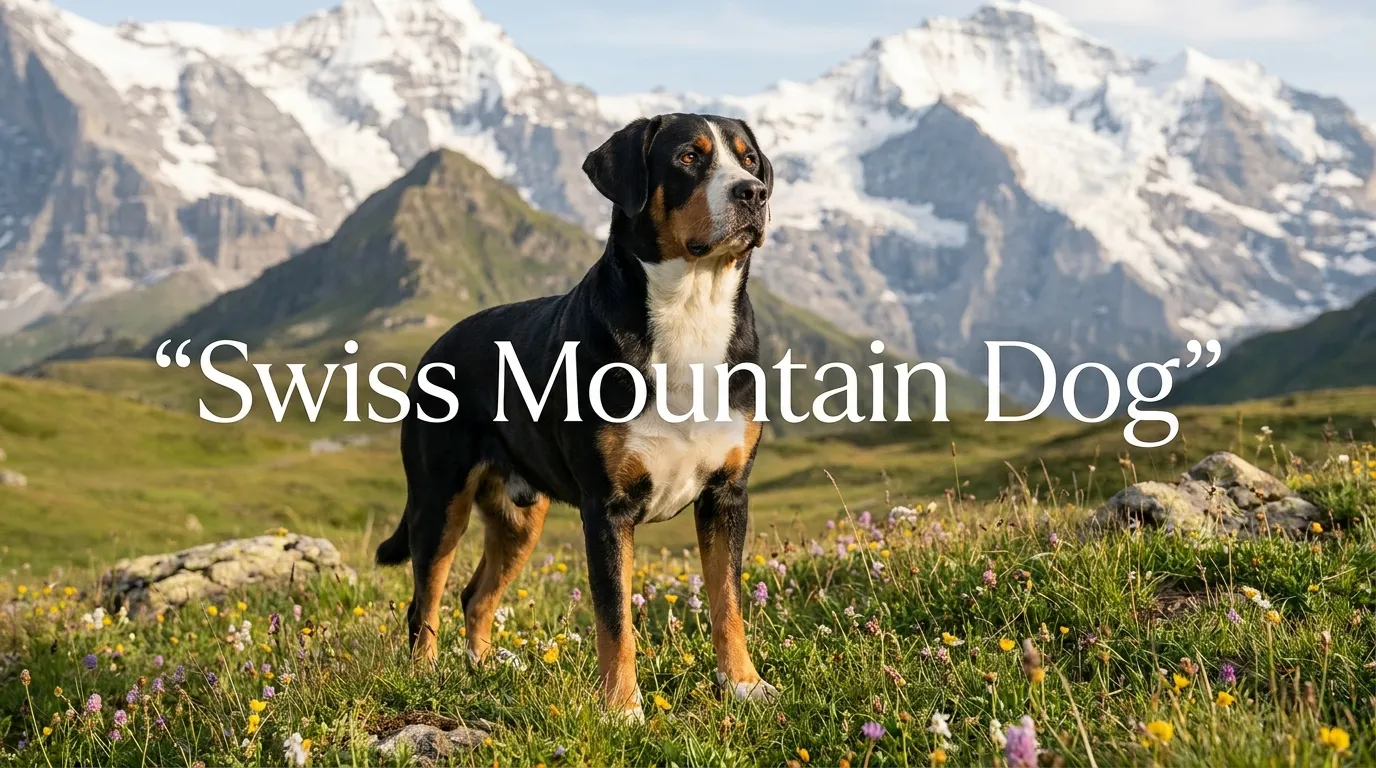
Search for a Swiss mountain dog in the United States, and you will usually encounter the Greater Swiss Mountain Dog, or “Swissy,” a powerful tricolored working breed developed in Switzerland. These dogs combine impressive physical strength with a devoted, people-oriented personality, but their size, training needs, shedding, and health considerations make them a much better match for some households than others. Before bringing one home, prospective owners should understand what daily life with a 100-plus-pound working dog actually involves.
Quick answer: The Greater Swiss is a large, strong, short-coated Swiss working breed known for loyalty, confidence, alertness, and close attachment to its family. It needs consistent training, early socialization, moderate daily exercise, room to live comfortably, and an owner prepared for substantial shedding and the health considerations associated with a giant breed.
The Swissy at a glance
| Trait | What to expect |
|---|---|
| Origin | Switzerland |
| Breed group | Working Group in the US |
| Male height | About 25.5–28.5 inches |
| Female height | About 23.5–27 inches |
| Male weight | Commonly about 115–140 pounds |
| Female weight | Commonly about 85–110 pounds |
| Coat | Short, dense double coat |
| Standard colors | Black, red, and white |
| Temperament | Bold, faithful, alert, willing to work |
| Exercise | Moderate daily activity plus purposeful work |
| Grooming | Simple coat care, but significant shedding |
| Typical health concerns | Orthopedic disease, bloat/torsion, eye issues, and other breed-associated conditions |
| Best suited to | Involved owners comfortable training a very large working dog |
The height ranges come directly from the official breed standard, while the Greater Swiss Mountain Dog Club of America (GSMDCA) gives the commonly cited adult weight ranges above. Although the short coat can make the breed look comparatively low-maintenance, its thick undercoat means owners should still expect considerable hair around the home. Size also affects everything from food and veterinary costs to transportation, crates, beds, and safe leash handling.
What does “Swiss mountain dog” actually mean?
The name can be confusing because “Swiss mountain dogs” is also an English term for the four related Swiss Sennenhund breeds. Those four are the Greater Swiss Mountain Dog, Bernese Mountain Dog, Appenzeller Sennenhund, and Entlebucher Mountain Dog, all of which trace their working history to Swiss farms and Alpine herdsmen. In the United States, however, someone using the singular phrase is frequently looking for information about the Greater Swiss Mountain Dog, so that is the breed covered in detail here.
“Sennenhund” comes from the German word Hund, meaning dog, combined with the term used for Alpine herdsmen and dairymen known as Senn or Senner. Historically, these versatile farm dogs helped move livestock, protect farms, accompany their people, and in some cases pull loaded carts. Their shared tricolor appearance explains why people unfamiliar with the breeds can easily confuse one for another.
The four Swiss Sennenhund breeds
| Breed | General distinction |
|---|---|
| Greater Swiss Mountain Dog | Largest of the four; short coat; strong draft and sentinel heritage |
| Bernese Mountain Dog | Large breed distinguished by its longer, silky coat |
| Appenzeller Sennenhund | Smaller, energetic herding and farm dog |
| Entlebucher Mountain Dog | Smallest of the four and an agile cattle-working breed |
The Greater Swiss and Bernese are the two that US families are most likely to compare because both are large, black-red-and-white dogs with similar farm-dog histories. The Appenzeller and Entlebucher are notably smaller and generally more agile, reflecting their stronger emphasis on moving livestock. All four were bred to work rather than simply look impressive beside an Alpine landscape.
From Swiss farm worker to American companion
The Greater Swiss developed as an all-purpose farm dog capable of pulling carts, moving cattle, watching property, and living alongside the family. As mechanized transportation replaced much of the work previously done by draft dogs, the breed’s numbers fell dramatically around the turn of the 20th century. The first Swissies arrived in the United States in 1968, and the American Kennel Club granted the breed full recognition in 1995.
That working history still matters because modern Swissies retain the body, instincts, and mindset of dogs developed to perform useful jobs. A Swissy may now spend more time walking suburban streets than pulling dairy carts, but purposeful activity remains valuable for both physical and mental well-being. Owners who understand that heritage tend to have more realistic expectations about training, exercise, alert barking, and the breed’s desire to participate in family life.
Size and appearance: a genuinely powerful dog
The official AKC breed standard describes the breed as large, powerful, heavy-boned, well muscled, and still agile enough to perform farm work. Adult males ideally stand 25.5 to 28.5 inches at the shoulder, while females stand 23.5 to 27 inches, and the national breed club commonly lists males around 115–140 pounds and females around 85–110 pounds. This is therefore not merely a “big” dog but one whose physical strength has practical consequences for training, handling, travel, and home setup.
A classic Swissy has a short, dense double coat with black, red, and white coloring, plus a broad, strong body and an animated but gentle expression. The coat is dramatically shorter than a Bernese Mountain Dog’s, which is one of the easiest ways to distinguish the two at a glance. Despite that short hair, the Swissy is not a low-shedding or hypoallergenic choice.
Swiss Mountain Dog temperament and personality
A well-bred Greater Swiss is expected to be bold, faithful, willing to work, alert, and vigilant rather than timid or needlessly aggressive. The breed’s sentinel background means many Swissies notice unfamiliar people, animals, sounds, or changes around the property and may announce them with a distinctive alarm bark. Acceptance of strangers varies among individual dogs, ranging from openly social to more reserved observation, but the breed standard treats both serious shyness and aggression as undesirable.
Swissies also tend to bond strongly with the people they live with and generally prefer being included in household activity rather than isolated from the family. That closeness is appealing to owners who want an involved companion, but it also means a lifestyle built around leaving the dog confined and alone for long periods is a poor match. The national breed club’s ownership guide specifically emphasizes that these dogs are happiest as family members with regular interaction and purposeful activity.
Are Swissies good family dogs?
They can be affectionate and devoted family companions when their temperament, training, and environment are managed appropriately. Their sheer size, however, means interactions with small children require sensible supervision even when the dog has excellent intentions, because an excited adolescent Swissy can easily knock a child over. Families should evaluate the dog’s maturity and training as seriously as its friendliness.
The breed club also cautions that Swissies are generally better suited to owners with meaningful dog-handling experience than to people looking for an effortless first dog. Early socialization, consistent boundaries, leash manners, and household rules become particularly important when the puppy will eventually outweigh many adults. If you are comparing several breeds before making that commitment, Readella’s Pets section can serve as a starting point for broader pet-related reading.
Exercise needs: moderate does not mean inactive
A Swissy does not normally require the relentless daily mileage associated with some high-drive sporting or herding breeds, but it still needs regular activity. The AKC notes that one or two walks per day can meet a basic need, while hiking, obedience, drafting, backpacking, herding, and other structured activities can give mature dogs a useful outlet for their working instincts. The goal is consistent, purposeful exercise rather than exhausting the dog through repetitive high-impact activity.
Puppies and adolescents require additional care because their large frames develop over a long period and can be vulnerable to orthopedic stress during growth. The breed club advises against unlimited exercise and strenuous activities such as sustained jogging while a young dog’s skeletal system is still developing. Owners should work with their veterinarian and breeder to increase activity gradually rather than assuming a sturdy-looking puppy is physically mature.
Training a dog this strong should start early
Good leash manners are not optional with a breed historically capable of hauling substantial loads. Training should begin during puppyhood, before pulling, jumping, door rushing, or other seemingly minor habits become difficult to control in a dog weighing more than 100 pounds. Consistency, patience, clear expectations, and reward-based instruction give owners a much better foundation than waiting until physical strength becomes a problem.
Socialization is equally important because a sentinel breed needs to learn which people, environments, sounds, dogs, and everyday situations are normal. The objective is not to make every Swissy enthusiastically greet every stranger, but to develop a confident dog that can assess unfamiliar situations without fear or inappropriate aggression. Puppy classes, controlled exposure, handling practice, and everyday obedience can all contribute to that stability.
Grooming and shedding
The short Swissy coat does not tangle like a long coat, so routine grooming is relatively straightforward. Regular brushing removes loose undercoat, distributes natural oils, and helps owners notice skin changes, lumps, irritation, or parasites that are otherwise easy to overlook. Nail care, dental hygiene, and routine ear checks should be part of the same basic maintenance schedule.
What surprises many first-time owners is the amount of shedding produced by that dense double coat. The national breed club explicitly warns that the assumption that Swissies shed very little because their coat is short is a misconception, and shedding can continue throughout the year with heavier periods. Anyone who strongly dislikes dog hair on furniture, flooring, clothing, and vehicles should factor that reality into the decision before choosing the breed.
Cold weather suits them better than extreme heat
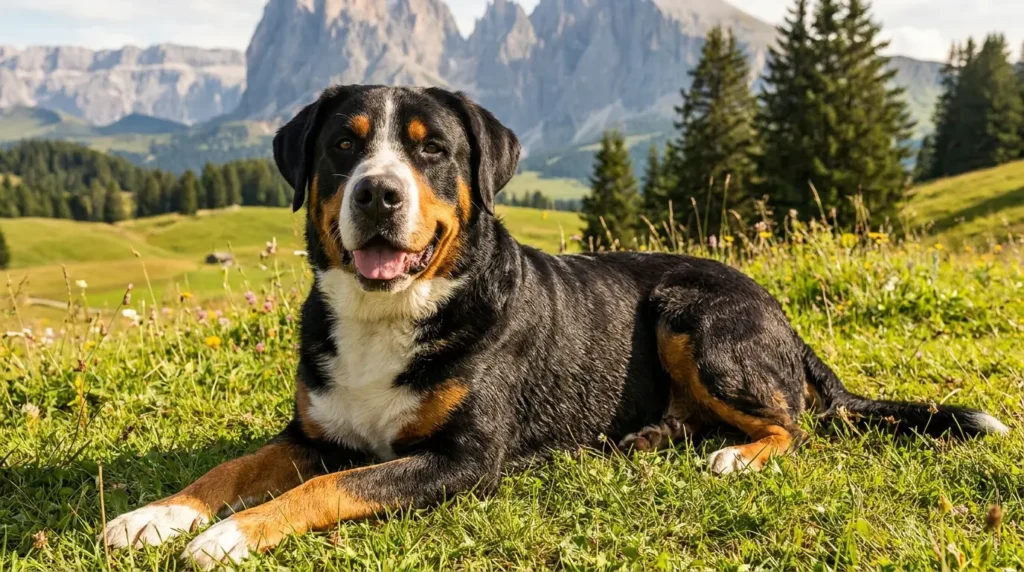
The breed’s dense coat and Alpine background make cold conditions far easier for the breed than intense summer heat. AKC guidance notes that many Swissies handle hot weather poorly and recommends water, shade, cooler indoor areas, and avoiding strenuous exercise during the hottest part of the day. That consideration is especially important for families in hotter parts of the South, Southwest, and other US regions with long summers.
Living in a warm state does not automatically rule out the breed, but the household must be able to manage heat exposure intelligently. Air-conditioned indoor living and exercise scheduled for cooler mornings or evenings become practical necessities during periods of high temperature. Owners should also learn their veterinarian’s guidance on recognizing and preventing heat-related illness rather than relying only on the dog’s willingness to keep moving.
Greater Swiss Mountain Dog health concerns
Like other large and giant breeds, Swissies can develop orthopedic problems, and the national breed club identifies hip and elbow dysplasia as important concerns. Shoulder osteochondrosis dissecans, or OCD, is another issue discussed in the club’s health resources, along with eye problems and several other conditions. None of these diagnoses is inevitable, but they make documented health testing in breeding dogs particularly important.
The breed can also be affected by gastric dilatation-volvulus, commonly called bloat, as well as splenic torsion, both of which can become life-threatening emergencies. Urinary incontinence occurs in the breed as well, particularly in females. The GSMDCA also tracks epilepsy and gastrointestinal problems, sometimes associated with the episodes owners call licky fits. Prospective owners should review the GSMDCA health information and discuss breed-specific risks with their veterinarian before an emergency occurs.
Health testing to ask a breeder about
The national breed club recommends evaluations of the hips, elbows, shoulders, and eyes for breeding Swissies. These are also the tests listed by the AKC in its Working Group health-testing recommendations. Buyers should ask to see verifiable results rather than accepting a vague claim that a puppy’s parents were vet-checked.
A CHIC number can be useful because it shows that the required breed-specific testing was completed and the results made publicly available. Importantly, the GSMDCA notes that having a CHIC number does not by itself mean every individual result was normal or passing, so buyers still need to inspect those results. That distinction makes publicly documented testing considerably more informative than marketing claims about “healthy bloodlines.”
How to find a Swissy puppy in the US
Because Swissies remain relatively uncommon, finding the right puppy may require patience rather than simply choosing whichever litter is available first. The breed club advises buyers to look for responsible breeders who discuss health testing openly, use written contracts, and provide medical and pedigree records. Good breeders also stay available after the puppy goes home and take responsibility for the dogs they produce if an owner can no longer keep them. A breeder asking you detailed questions about your household and experience should generally be viewed as a positive sign rather than an inconvenience.
The GSMDCA breeder directory provides a US-focused place to begin the search, although the club makes clear that inclusion is not an unconditional guarantee or endorsement of any individual breeder. Buyers should independently verify health claims, test results, registration information, contracts, and the conditions in which puppies are raised. Breed rescue is another route worth considering, particularly for households open to an adult dog rather than a young puppy.
Swiss Mountain Dog vs. Bernese Mountain Dog
These breeds share Swiss origins, tricolor markings, large bodies, and histories as versatile farm dogs, which explains why they are so commonly confused. The most obvious difference is coat length: the Greater Swiss has short hair, while a Bernese Mountain Dog has a much longer coat. Swissies are also generally larger and heavier and tend to show a somewhat more intense sentinel and working-dog character.
| Feature | Greater Swiss (Swissy) | Bernese Mountain Dog |
|---|---|---|
| Coat | Short double coat | Longer double coat |
| Overall size | Generally larger and heavier | Large, but usually lighter |
| Traditional work | Drafting, cattle work, guarding | General farm work, cattle movement, carting |
| Watchfulness | Strong alert/sentinel tendency | Alert but generally described as softer |
| Shedding | Significant | Significant |
| Family attachment | Strong | Strong |
Neither breed is simply a low-maintenance version of the other. A shorter Swissy coat means less brushing than the Berner’s long coat, but it does not eliminate shedding, while the Swissy’s greater weight and working intensity can make training and physical control more demanding. Prospective owners should therefore compare temperament, health, exercise, grooming, and lifestyle fit rather than choosing solely by appearance.
Is a Swiss Mountain Dog right for you?
A Greater Swiss may fit your household well when:
- You want a large, loyal dog that stays closely involved with family life.
- You have enough time for training and thorough early socialization.
- You are comfortable managing a physically powerful adult dog.
- You can provide moderate daily exercise and meaningful activities.
- You accept substantial shedding despite the breed’s short coat.
- Your home can keep the dog comfortable during hot US summers.
- You are prepared for the financial realities of feeding and caring for a giant breed.
The breed may be a poor match when:
- You want an easy first dog requiring minimal training.
- Your dog would routinely spend long periods isolated from household activity.
- You strongly dislike shedding or want a hypoallergenic breed.
- You want a long-distance running partner, particularly while the dog is young.
- You cannot safely manage a large dog around children, visitors, or other animals.
- You are unwilling to investigate breeder health testing and breed-specific medical risks.
The decision ultimately comes down to whether you want the responsibilities that accompany the qualities people find appealing about the breed. The same size that gives a Swissy its striking presence also makes loose-leash walking and household manners essential, while the vigilance that makes it an effective watchdog makes socialization important. Meeting several adult Swissies in person before committing to a puppy can reveal far more about the experience than photographs alone.
The bottom line
A Swiss mountain dog, when the term refers to the Greater Swiss, offers loyalty, confidence, working ability, and a close family bond in an exceptionally powerful package. The best owners are prepared to train early, manage heavy shedding, provide regular activity, protect the dog from excessive heat, investigate documented health testing, and make room for a very large companion in everyday life. If those responsibilities sound as appealing as the breed’s striking tricolor appearance, meeting reputable breeders, rescue volunteers, and adult Swissies is the most useful next step.
Frequently asked questions
Are Swiss Mountain Dogs good with children?
Swissies can be affectionate, devoted family dogs and may live very successfully with children. Their adult size and adolescent enthusiasm still require supervision, because accidental knocks can happen even without aggressive behavior. Training both the dog and children to interact calmly and respectfully is more useful than relying on a breed label such as good with kids.
Do Swissies shed a lot?
Yes, they can shed considerably despite having a short coat. Their dense undercoat releases hair throughout the year, with heavier shedding periods adding to the amount owners need to brush and vacuum. The breed is therefore a poor choice for someone assuming that short hair automatically means minimal shedding.
How much exercise does a Swissy need?
A healthy adult generally benefits from daily walks and regular opportunities for more purposeful physical and mental activity. Hiking, obedience, drafting, backpacking, and other dog sports can suit mature Swissies, but young dogs should not be pushed into unlimited high-impact exercise while their bodies are developing. Exercise needs also change with age, health, weather, and the individual dog’s condition.
Are Swissies easy to train?
They are capable working dogs that can learn very well, but their strength makes consistency especially important. Owners should begin leash work, household manners, socialization, and basic obedience during puppyhood rather than waiting until the dog reaches adult size. Patient, fair, consistent training creates a more manageable companion than harsh methods or inconsistent rules.
What is the difference between a Swiss Mountain Dog and a Bernese Mountain Dog?
The Greater Swiss is generally larger, heavier, and much shorter-coated than the Bernese Mountain Dog. Both share Swiss farm-dog origins and familiar black, rust, and white markings, but the Swissy is typically described as having a stronger vigilant or sentinel character. The easiest visual clue is usually the coat, because a Berner looks noticeably fluffier.
How long do Swissies live?
The national breed club notes that many members of the breed can live about 8–12 years or longer, although no number predicts an individual dog’s lifespan. Genetics, body condition, preventive care, accidents, and specific health conditions can all affect longevity. Choosing health-tested parents and maintaining regular veterinary care cannot guarantee a long life, but they are sensible parts of responsible ownership.
